Last updated: August 11, 2026
- For example, if an HMO premium is $300 a month and a PPO is $420, the $120 difference adds up to $1,440 a year.
- Quick answer: For hmo vs ppo freelancers: which health plan is better?
- Key facts – HMO: usually lower monthly premiums, tighter networks, and more referral rules.
- When the answer is yes, an HMO can be a very smart buy.
FTC disclosure: If this article later includes affiliate links, I may earn a commission at no extra cost to you.
Quick answer: For hmo vs ppo freelancers: which health plan is better? For most freelancers, a PPO is the safer pick when your income is variable, you travel, or you want fewer referral hassles; an HMO is better when you can remain in one local network and you want lower, more predictable costs.
Key facts
– HMO: usually lower monthly premiums, tighter networks, and more referral rules.
– PPO: usually higher monthly premiums, broader choice, and more out-of-network flexibility.
– For freelancers: network fit matters more than a generic “best plan” label.
– Check before you buy: your doctors, specialists, zip code, and subsidy eligibility can change the real cost.
I write about health coverage for self-employed people, and the hmo vs ppo freelancers: which health plan is better? question usually is not “Which plan is best in the abstract?” It is more like: “What still works when my income swings, my client list sends me across town, and I cannot afford a surprise bill?” Honestly, this is the whole puzzle.
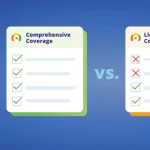
Quick comparison: HMO vs PPO for freelancers
| Decision factor | HMO | PPO |
|---|---|---|
| Monthly premium | Usually lower | Usually higher |
| Out-of-pocket predictability | Often better | Can be less predictable if you go out of network |
| Choice of doctors | Narrower network | Wider network |
| Referrals for specialists | Usually required | Usually not required |
| Out-of-network coverage | Usually little or none except emergencies | Often some coverage |
| Best for | Freelancers who stay local and want lower monthly costs | Freelancers who travel, move around, or want more flexibility |
| Main downside | Less freedom, more rules | Higher ongoing cost |
The short answer: which is better?
If I had to boil it down, I’d say this: choose the HMO when you are price-sensitive and your care can stay inside one local system; choose the PPO if flexibility matters more than the lowest premium. Simple? Yes. Neat? Not really.
Freelancers often deal with edges that full-time employees may never think about, such as:
- your income can change month to month
- you may not know where you will live next year
- you may work odd hours and want easier access to care
- you may delay care if a plan feels complicated
That is why the cheapest premium is not always the cheapest plan. A freelancer who saves a bit each month on an HMO but then pays more to reach the right specialist can end up in a worse spot. And a PPO can be wasted money when you pay for freedom you never use. That math stops working fast.
How I’d judge the decision as a freelancer
The real question is not “Which plan is better?” It is:
Will I actually use the network this plan wants me to use?
When the answer is yes, an HMO can be a very smart buy. When the answer is no, I’d lean PPO.
Here is the test I would use:
- If you already know your doctor, dentist, and likely specialist are all in one local network, HMO becomes much more appealing.
- If you want to keep a doctor you already trust, or you live part-time in more than one place, PPO usually makes life easier.
- If you expect to need specialist care and do not want a gatekeeper, PPO has the edge.
- If every extra dollar in premium hurts, HMO often fits the budget better.
That is the practical split. Now let me break down the factors that actually change the decision.
Price: HMO wins for monthly affordability, PPO wins for flexibility
On price alone, I would usually give the round to the HMO.
Why? HMOs are commonly built around tighter networks and more managed care. That setup often lowers the monthly premium and can make routine care feel more predictable. For a freelancer with irregular income, that predictability matters.
For example, if an HMO premium is $300 a month and a PPO is $420, the $120 difference adds up to $1,440 a year. But lower premium is not the whole bill. I would never compare these plans only by the monthly payment, because freelancers are the people most likely to feel the pain of hidden usage costs.
Those costs can include:
- specialist visits
- out-of-network charges
- referrals that slow care down
- higher bills if the only convenient doctor is outside the network
A PPO usually costs more up front. That is the trade-off. You are paying for freedom, not bargain pricing. According to HealthCare.gov, PPOs usually cost more and HMOs usually limit coverage to in-network care except emergencies.
My take: if your budget is tight and you can stay in-network, HMO wins. If you want insurance that behaves more like a permission slip to see the doctor you want, PPO’s higher premium may be worth it.
Who should skip the HMO on price alone: freelancers who already know they will need a wider provider choice, or who routinely see specialists and do not want network restrictions to control access.
Doctor choice and access: PPO wins clearly
This is the biggest difference for many freelancers, and I think PPO wins this round clearly.
An HMO usually asks you to stay inside its network and often to start with a primary care doctor who directs specialty care. That works well when your care is straightforward and local. It gets annoying fast when you want to choose among several specialists, or when your preferred doctor is outside the network.
A PPO gives you more room to move. In plain English, that means:
- more freedom to pick a doctor
- more room to see specialists without as many hoops
- better odds that a move, trip, or temporary relocation won’t break your coverage routine
For freelancers, that matters because your work life is often less stable than an employee’s. You may not know which city you will be in six months from now. You may spend part of the year near family in another state. You may want a plan that does not force you to rebuild your care around one neighborhood. KFF notes that provider networks and out-of-network rules can change your actual costs, not just your convenience.
My take: if you hate being boxed in, PPO is the better fit. You are buying flexibility, and that flexibility has real value when your schedule and address are not fixed.
Who should skip the PPO on access alone: freelancers who are happy with one local clinic and do not want to pay extra for a broader menu they will never use.
Specialists and referrals: PPO wins if you want less friction
For specialty care, I would also give the round to the PPO.
HMOs often use referrals as a gatekeeping tool. Sometimes that is good care coordination. Sometimes it feels like a waiting room for the waiting room. If you are healthy, you may barely notice. If you need dermatology, mental health support, physical therapy, or another specialist, those extra steps can become friction.
A PPO usually reduces that friction. You can often book with a specialist more directly, and that is a big deal for freelancers who may already be losing work time to appointments.
This is one place where a generic article often gets lazy. It says “HMOs are more restrictive” and moves on. The real issue is not ideology. It is time.
When a plan adds two extra phone calls and one more approval step every time you need care, that is a cost. It may not show up on the premium line, but it still costs you.
My take: if your health history suggests specialist visits are likely, I would lean PPO unless the HMO network is unusually strong and your doctors are all already inside it.
One honest downside of PPOs: the easier access can tempt you to use out-of-network care casually, and that is where bills can get messy fast.
Networks and location: HMO wins only if your life is geographically stable
Freelancers do not all live the same kind of life. Some stay in one metro area for years. Others split time between cities, use coworking spaces in different states, or move when a lease ends. That difference matters more than most plan comparisons admit.
If you are stable in one place, HMO can be a strong fit. The network may be perfectly usable, and you may never feel the restriction.
When your life is mobile, PPO usually wins. A broader network gives you fewer surprises when you are away from your usual doctors.
This is the “generic article gets it wrong” section. Many comparisons treat network size as a nice-to-have, but for freelancers it is often the deciding factor. If you are not sure how much network breadth matters in your area, compare plan directories and, if needed, consult a licensed insurance professional before you enroll.
Ask yourself:
- Do I know where I will be living next year?
- Do I split time between two places?
- Do I need a plan that works if I am away from my main city?
- Am I comfortable changing doctors to save money?
If those answers point toward movement, I would not pick an HMO just because the premium looks friendlier.
Paperwork and hassle: PPO wins for independence, HMO wins for simplicity
This round is mixed, but I would frame it this way: PPO wins for independence; HMO wins for administrative simplicity if you stay inside the system.
An HMO can feel cleaner day to day because the plan is built around a defined network and a more managed structure. If you know how to use it, the process can be straightforward.
But there is a catch: “simple” only stays simple when you follow the rules. Once you drift outside the network or need a referral, the simplicity starts to disappear.
A PPO gives you more self-direction. That matters for freelancers because your time is your money. I do not mean that as a slogan. I mean that every extra form, phone call, and referral delay can eat into billable hours.
So my view is:
- HMO: simpler if you are committed to the network and okay with the rules
- PPO: easier if you want to act first and ask permission less often
Who should skip the HMO on hassle grounds: freelancers who get annoyed by gatekeeping and do not want to track referrals.
Who should get an HMO
I would point a freelancer to an HMO if they fit most of these, but it is still worth checking the plan details with a licensed insurance professional or marketplace assister:
- they live in one place most of the year
- they already like doctors in the plan’s network
- they want the lower monthly premium more than they want flexibility
- they are comfortable starting care with a primary doctor
- they do not expect lots of out-of-network treatment
This is the plan for the freelancer who wants to control fixed costs and can accept a narrower lane. HealthCare.gov says HMOs are designed around network-based care, so the fit is strongest when your doctors are already in that network.
Weakness of the HMO: it can become frustrating the moment you need care outside the network or want more direct access to specialists.
Who should get a PPO
I would steer a freelancer toward a PPO if they fit most of these, but they should still compare networks, deductibles, and out-of-network limits with a broker or other licensed professional:
- they travel often or split time between locations
- they want to keep a doctor who may not be in a narrow network
- they expect specialist visits and want less referral friction
- they are willing to pay more for flexibility
- they do not want their care shaped too tightly by network rules
This is the plan for the freelancer who values choice and convenience enough to pay for it. KFF’s explanation of network design is a useful place to start when you are comparing those trade-offs. A little more freedom costs real money; that is the trade.
Weakness of the PPO: if you do not use the flexibility, you may simply be paying extra for options you never touch.
Buy options: where to check current pricing
I cannot give you static prices, because those change and depend on your location, age, tobacco status, subsidy eligibility, and enrollment rules. The right move is to check current pricing with each insurer or marketplace for your area.
HMO options
- Check current plans through your state marketplace or HealthCare.gov if you use the federal marketplace
- Look at insurer sites directly for local HMO options
- See whether the plan appears on Amazon or Walmart only if you are comparing related health-adjacent products, not insurance itself; health insurance is not typically bought there
PPO options
- Check current plans through your state marketplace or HealthCare.gov
- Compare carrier websites directly
- Ask your agent or broker to show PPO offerings side by side with the HMO alternatives
For health insurance, the useful “retailers” are usually the marketplace and the insurer itself. That is where the real comparison lives. HealthCare.gov is the authoritative starting point for marketplace shopping.
FAQ
Is PPO always better than HMO?
No. PPO is usually better when you want flexibility, but that flexibility often costs more. If you can stay in one network and want lower monthly premiums, HMO can be the smarter choice.
Is HMO a bad idea for freelancers?
Not at all. For a freelancer with a stable address, trusted in-network doctors, and a tight budget, HMO can be the more practical plan.
Which is better for mental health care?
It depends on the network and the therapist list, not just the plan label. PPO often makes it easier to find someone outside a narrow network, but you should still check coverage details carefully.
Which is better if I travel a lot?
Usually PPO. A broader network is easier to live with when you are not in one place all the time.
Can I switch later?
Often yes, but only during open enrollment or after a qualifying life event. Do not assume you can change whenever you want. Check your marketplace or insurer rules.
Final verdict
If you are a freelancer choosing between HMO and PPO, my pick is this: choose PPO if your work or life is mobile, if you want direct access to specialists, or if you hate network restrictions; choose HMO if you want lower monthly costs and you are confident you can stay inside one local system.
The one condition that flips my recommendation is this: when you have a strong local doctor network and your budget is tight, I would switch from PPO to HMO. Otherwise, I would pay for the PPO’s flexibility and avoid the friction that can make freelancing harder than it already is.